LFP (Lithium Iron Phosphate) is today the dominant battery chemistry for home inverters, solar storage, and electric vehicles in India — chosen not just for its cycle life and cost, but for one reason above all others: it does not catch fire. This is the story of how that happened.
The Times of India
NEW DELHI EDITION | TUESDAY, APRIL 26, 2022 | ₹12.00
NATIONAL · ELECTRIC VEHICLES · SAFETY
4 Electric Scooters Catch Fire in 7 Days; Govt Orders Probe Into Battery Safety
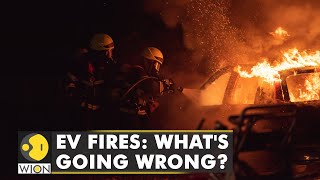
NEW DELHI: In a week that has sent shockwaves through India's fledgling electric vehicle industry, four separate incidents of electric two-wheelers catching fire have been reported across the country, leaving one person dead and raising urgent questions about battery safety standards in mass-market EV products.
The incidents, involving vehicles from Ola Electric, Pure EV, and Okinawa, have prompted the Ministry of Road Transport to issue notices to manufacturers and announce a formal technical inquiry. Experts say the fires point to inadequate Battery Management Systems and the use of NMC cells without sufficient thermal protection.
"The government has asked all EV manufacturers to submit detailed reports on their battery pack design, BMS specifications, and thermal management systems within 30 days. Non-compliance will result in mandatory recalls." — Ministry of Road Transport & Highways
Industry analysts say the crisis may accelerate a shift toward Lithium Iron Phosphate (LFP) chemistry, which carries significantly lower fire risk compared to the Nickel Manganese Cobalt (NMC) batteries involved in the incidents. Okinawa has announced a recall of 3,215 vehicles. Pure EV has recalled 2,000 units.
— Reported by TOI National Bureau | Continued on Page 7
In April 2022, four electric scooters caught fire in India in the span of seven days. Ola. Pure EV. Okinawa. The videos went viral. A 40-year-old man in Vellore died when his scooter exploded in a parking lot. His family had no warning. The battery simply decided it was done.
That week changed India's battery market permanently. Not because regulators stepped in — though they did. Not because companies recalled products — though they did that too. It changed because the market itself, made up of millions of buyers, installers, fleet operators, and inverter manufacturers, made a silent collective decision: we are not going to gamble on chemistry anymore.
The chemistry they turned to was not new. It had existed since 1996. The world had looked at it, set it aside, and moved on to other things. Then India brought it back — not out of sentimentality, but out of necessity. That chemistry is LFP: Lithium Iron Phosphate.
📝 Kunwer Sachdev — Inverter Man of India
The technology was genuinely improving — cycle life was getting better, the temperature range was widening, and cells were shrinking in size. Engineers were excited about energy density and range numbers. But the major flaw that no one paid enough attention to was safety. Everyone was chasing performance. Safety was treated as a secondary concern, something to be dealt with through the BMS and thermal management systems — not something baked into the chemistry itself. That blind spot is what made 2022 so painful. The fires didn't come from nowhere. They came from years of the industry prioritising the wrong metrics.
The Long Road: How LFP Was Born, Ignored, and Rediscovered
The story of LFP begins not in a battery factory, but in a university lab in Texas. In 1996, Professor John Goodenough — the same scientist who had earlier invented the lithium cobalt oxide cathode that made the modern lithium-ion battery possible — along with his colleagues Akshaya Padhi and K.S. Nanjundaswamy, published a paper describing a new cathode material: lithium iron phosphate.
On paper, it looked inferior to what already existed. Lower energy density. Lower voltage. The electric vehicle industry, just beginning to dream big, dismissed it. Why would you want a battery that stores less energy per kilogram? Range anxiety was already the enemy. Nobody wanted a battery that made it worse.
"The world chased energy density for twenty years. More range. More power. More everything. It got more fires too."
So the industry went the other way. NMC — Nickel Manganese Cobalt. NCA — Nickel Cobalt Aluminum, Tesla's original choice. These chemistries packed more energy into less space. They were the future. LFP was an interesting dead end, useful perhaps for power tools and stationary storage, but not for the EV revolution the world was building.
For nearly fifteen years, that remained the consensus.
1996
LFP chemistry discovered by Goodenough et al. at UT Austin. World largely ignores it — too heavy, too low voltage, too little energy density for the EV ambitions of the era.
2000s
NMC and NCA dominate lithium battery development. Tesla builds Roadster on NCA cells. The race is for range, not safety. LFP lives quietly in niche industrial applications.
2009
BYD launches the first mass-produced LFP-powered electric bus in China. It is slow, heavy, and unimpressive by EV standards. But it does not catch fire. Not once.
2012–2018
NMC reaches energy densities of 200+ Wh/kg. EV range improves dramatically. LFP is written off for passenger vehicles. India's inverter market is still dominated by lead-acid. Nobody is seriously talking about lithium for home inverters yet.
2020
The pivot. Tesla announces it will use LFP in standard-range Model 3 vehicles made in China. CATL announces its Blade Battery — a structural LFP cell that packs surprisingly well. The world pauses. Why is the most valuable car company in the world going back to the "inferior" chemistry?
2021–22
India's EV boom begins. Ola, Ather, Okinawa, Pure EV, Hero Electric flood the market. Most use NMC cells — cheaper to procure from China, lighter for the vehicle. The fires begin. India starts asking hard questions.
2023–26
LFP becomes the default chemistry for India's inverter, BESS, solar storage, and increasingly EV markets. Waaree begins building India's first 16GWh LFP gigafactory. Amara Raja commits ₹9,500Cr to ACC cell production. The shift is complete.
📝 Kunwer Sachdev — Inverter Man of India
I started working with lithium batteries in 2020, when the technology was still in nascent stages in India. We experimented hands-on with both NMC and LFP cells — whichever was available at the time. And very quickly, a pattern became clear: NMC is extremely sensitive. Even small variations in cell voltages can create serious problems. By 2022, I was certain that for India, LFP was the only suitable chemistry. Yes, in colder regions like Kashmir, LFP performance drops at lower temperatures — that is a known limitation. But in the Indian climate above 20°C, which covers the vast majority of the country, LFP outperforms on every practical metric: better cycle life, more tolerant of rough handling, more forgiving of imperfect BMS designs. It is simply the right chemistry for where India actually lives.
When India's Batteries Started Burning
The fires were not one event. They were a pattern — slow at first, then impossible to ignore.
In September 2021, an Okinawa Praise electric scooter caught fire on a street in Pune. The footage was grainy, shot on a mobile phone. It circulated on WhatsApp groups. People assumed it was a one-off — a bad batch, a charging mistake, user error. The industry said nothing official.
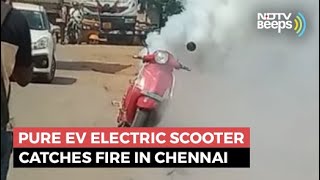
Then in March and April 2022, everything broke at once. A Pure EV scooter burned in Chennai. An Ola S1 caught fire in Maharashtra while parked. Four scooters from three different companies burned in seven days. The videos were no longer grainy — they were shot on good cameras, with flames clearly visible, people scrambling back, someone's vehicle of hope reduced to a black skeleton on a roadside.
🎥 The Incidents — Watch the Videos