Electric Scooter Battery Replacement Cost in India (2026): Replace or Buy New?
Your scooter still rides fine, but the range has quietly collapsed. The dealer quotes a number that makes you wince. Is a new battery worth it — or should that money go toward a new scooter? Here are the real 2026 prices, and a simple rule to decide.
📅 June 2026⏱ 9 min read🇮🇳 India · Independent & brand-neutral
It is the question every early EV scooter buyer eventually asks: the bike is three or four years old, it still starts and runs, but a battery that once did 110 km now struggles to reach 60. The service centre's answer is blunt — replace the pack — and the quote often lands somewhere between ₹45,000 and ₹1.2 lakh. On a scooter that cost ₹1.2–1.6 lakh new, that is not a small decision.
This guide gives you two things: the real 2026 replacement prices for the most common scooters on Indian roads — Ola, Ather and TVS — and a clear, number-based rule for deciding whether to replace the battery or simply buy a new vehicle.
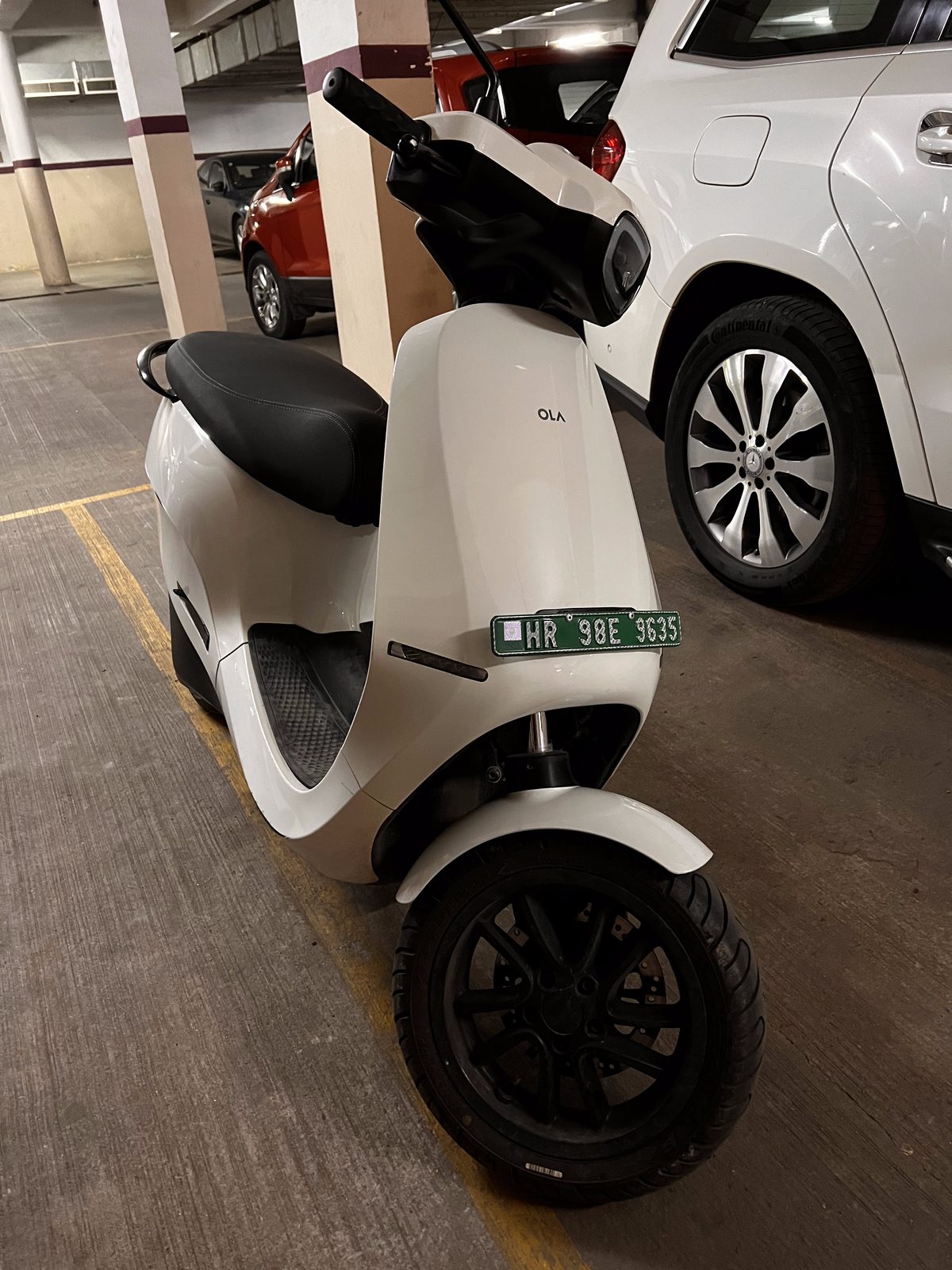
A worn battery can cut an electric scooter's range in half. Knowing the real replacement cost is the first step to a smart decision.
⚡ The short answer
Replace the battery if it costs less than ~40% of a new scooter and the rest of the bike is healthy. Once the quote crosses half the price of a new model — or the motor and controller are also tired — buying new is usually the smarter rupee.
2026 replacement-cost range across India's mainstream electric scooters. Source: service-centre quotes, May–June 2026.
2026 Battery Replacement Cost — Ola, Ather, TVS
Prices below reflect mid-2026 service-centre quotes for a full battery pack replacement, inclusive of the new pack but before labour and any goodwill discount. Costs scale almost directly with pack size (kWh), because the cells are the bulk of the price.
Model & Pack
Capacity
Replacement Cost (2026)
Ola S1 X
2 kWh
₹45,000 – ₹50,000
Ola S1 X / S1 Pro
3 kWh
₹70,000 – ₹75,000
Ola S1 Pro
4 kWh
₹85,000 – ₹90,000
Ola S1 Pro+
5.2 kWh
₹1,10,000 – ₹1,20,000
Ather Rizta S / 450
2.9 kWh
₹60,000 – ₹65,000
Ather 450X / Rizta Z
3.7 kWh
₹70,000 – ₹80,000
TVS iQube
2.2 kWh
₹45,000 – ₹50,000
TVS iQube
3.1 kWh
₹65,000 – ₹70,000
TVS iQube
3.5 kWh
₹75,000 – ₹80,000
TVS iQube ST
5.3 kWh
₹1,15,000 – ₹1,20,000
Figures are indicative market quotes for mid-2026 and vary by city, warranty status and dealer. For the live, continuously updated range across every EV 2-wheeler segment, see our EV scooter battery price index.
Replacement cost rises almost linearly with battery capacity — chemistry and brand cause only minor differences. See the live EV scooter price index.
💰 PRICE INTELLIGENCE
EV battery cell prices fell ~5% in 2026 — and keep dropping.
Track today's live EV, inverter & solar battery prices in India.
On an electric two-wheeler, the battery is not a component — it is the expensive part of the machine. The cells alone typically make up 30–40% of the vehicle's original price. So when a pack needs replacing, you are effectively re-buying the single most valuable system in the scooter.
Three things drive the number on your quote:
Cell chemistry. NMC packs (lighter, higher energy density) cost more per kWh and age faster in Indian heat. LFP packs cost less per kWh and last longer, which is why the market is steadily shifting toward LFP for two-wheelers.
Pack size. A 5.3 kWh pack has more than double the cells of a 2.2 kWh pack — and the price reflects it almost linearly.
Single-source pricing. Most packs are proprietary. You usually cannot fit a generic battery, so the brand sets the replacement price with little competition.
"On an EV two-wheeler, you are not buying a scooter with a battery. You are buying a battery with wheels attached."
Replace or Buy New? The 40/50 Rule
Strip away the emotion and it comes down to a ratio: battery quote ÷ price of an equivalent new scooter.
Replace the battery when…
The quote is under ~40% of a comparable new scooter's price.
The motor, controller, chassis and electronics are healthy — you are only fixing the battery.
The model is recent enough that spares and service support will continue for years.
You like the scooter and a fresh pack effectively resets its life for another 5–7 years.
Buy a new scooter when…
The battery quote approaches 50% or more of a new model's price.
Other systems (motor, suspension, display, charger) are also failing — you would be pouring money into an ageing platform.
A newer model offers a longer warranty and LFP chemistry for not much more than the battery alone.
The brand's service network for your model is shrinking.
🧮 Worked example
A 3 kWh Ola S1 Pro battery at ₹72,000, against a new entry scooter at ~₹1,30,000, is a 55% ratio — borderline-to-buy-new. The same ₹72,000 on a scooter you would otherwise replace at ₹1,90,000 is a 38% ratio — clearly replace. Same battery, different verdict, because the comparison vehicle changed.
A simple, brand-neutral framework for the replace-or-replace-the-scooter decision.
Should You Wait? Where Prices Are Heading
If your scooter is still usable on a smaller range, waiting can pay. Global LFP cell prices fell to $65–75/kWh in 2026 (per BloombergNEF), and India is rapidly scaling domestic cell manufacturing. Replacement pack prices are expected to soften a further 10–15% by FY2027. A pack that costs ₹85,000 today may be meaningfully cheaper next year — and built on safer, longer-life LFP cells. (For why India standardised on this chemistry, see our deep-dive: Why India Chose LFP.)
The counter-point: a battery degrading below 60% range is also less safe to keep pushing through full discharge cycles. Waiting makes sense for months, not years.
How to Avoid an Early Replacement
Most premature battery failures in India are not manufacturing faults — they are usage and heat. A few habits genuinely extend pack life:
Avoid 100% → 0% cycles. Keeping the pack roughly between 20% and 80% for daily use dramatically slows degradation.
Don't park or charge in peak afternoon heat. Heat is the single biggest killer of cell life in India.
Use fast charging sparingly. It is convenient but accelerates ageing — keep it for when you truly need it.
Don't leave it fully drained for days. Deep, prolonged discharge is hard on cells and the BMS.
An EV scooter battery replacement in 2026 costs anywhere from ₹45,000 to ₹1.2 lakh — and the right call is not about the absolute number, but the ratio against a new vehicle. Keep it under 40% and the rest of the bike is sound: replace, and ride for years more. Cross 50%, or watch other systems fail: put that money toward a newer, safer LFP scooter instead.
Either way, do not accept the first quote as gospel. Check it against the real cell cost and the live market — that is exactly what this site exists to help you do.
💰 BEFORE YOU PAY THAT QUOTE
Check the live EV battery price range for your scooter.
How much does it cost to replace an Ola S1 battery in India?
Between ₹45,000 and ₹1,20,000 in 2026, depending on capacity — about ₹45,000–50,000 for the S1 X 2 kWh, ₹70,000–75,000 for 3 kWh variants, ₹85,000–90,000 for the 4 kWh Pro, and ₹1,10,000–1,20,000 for the 5.2 kWh S1 Pro+.
What does Ather and TVS iQube battery replacement cost?
Ather is roughly ₹60,000–65,000 (2.9 kWh) and ₹70,000–80,000 (3.7 kWh). TVS iQube runs from ₹45,000–50,000 (2.2 kWh) up to ₹1,15,000–1,20,000 for the iQube ST 5.3 kWh.
How long does an EV scooter battery last in India?
Typically 5–8 years or around 800–1,200 full cycles before capacity drops below 70–80%. LFP packs last longer than NMC, and real-world life depends heavily on heat and charging habits.
Is replacement covered under warranty?
Most brands offer 3 years or 8 years / 30,000–60,000 km cover, usually for defects and capacity falling below a stated threshold (often 70%) — but not physical or water damage. Always confirm the capacity-retention clause before claiming.
Will EV scooter battery prices fall further?
Likely yes — falling LFP cell prices and growing Indian cell manufacturing point to a further 10–15% drop by FY2027.
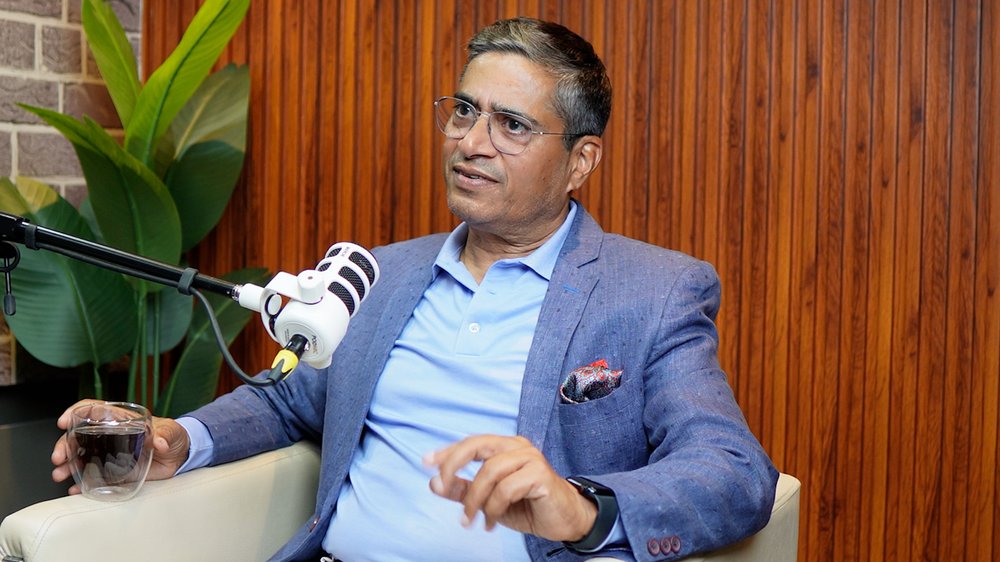
Founder of Su-Kam and Kunwwer.ai, and mentor at Su-vastika and several other companies — the “Inverter Man of India.” Read his story →
Disclaimer: This article is written by Kunwer Sachdev, mentor of Su-vastika. Kunwer Sachdev is no longer associated with Su-Kam Power Systems Ltd. in any capacity. Anyone dealing with Su-Kam should be aware that Kunwer Sachdev has no association with the Su-Kam brand or company.